
Interview
Matt Elliott / SLO verzija
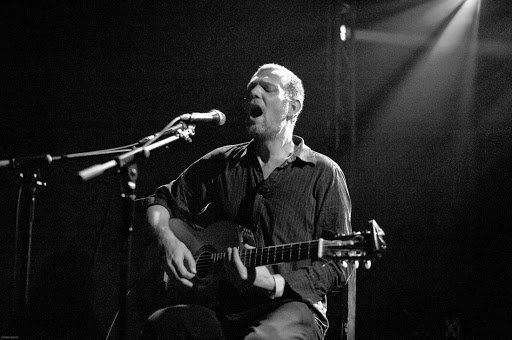
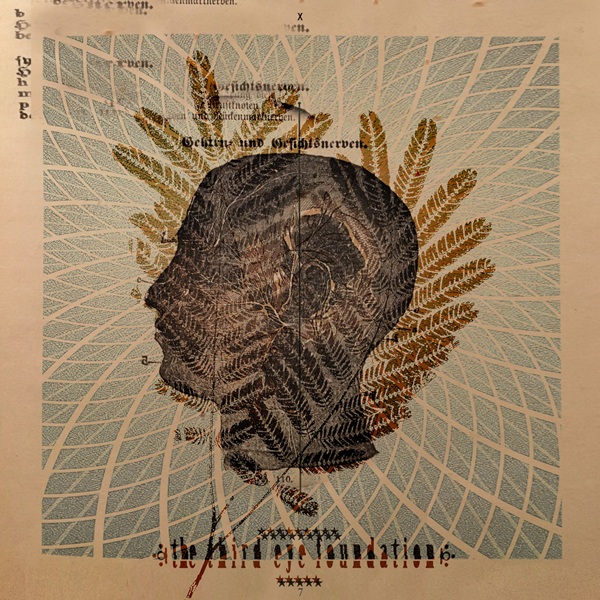
In the first half of the 1990s, two fairly distinct music scenes existed in Bristol. The first, more notorious one, was made up of pioneers of so-called trip-hop, such as Massive Attack and Portishead, while the second remained largely hidden from the broader public—bands like Amp, Flying Saucer Attack, and Movietone released their early records on smaller independent labels. This is where Matt Elliott first emerged in various roles, assisting numerous bands and running his own label, Linda’s Strange Vacation. Soon after, he launched his solo project, The Third Eye Foundation, in which he infused drum’n’bass with industrial electronic sounds and gloomy choirs.
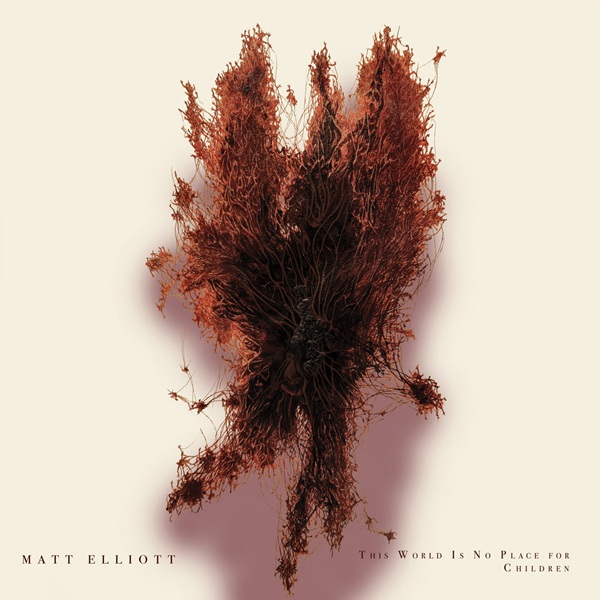
A major turning point came with his move to France. Matt Elliott began releasing music under his own name and completely changed his musical direction. The foundation of his compositions became “conventional” singing accompanied by piano and orchestrations, gradually incorporating acoustic guitar picking. By no means is this cheerful or optimistic music – quite the opposite. A ray of hope rarely shines through these sounds. He has released most of his albums on the French label Ici D’Ailleurs (Yann Tiersen, This Immortal Coil…), while his latest, milestone tenth album, This World Is No Place for Children, was released on Talitres Records. On this occasion, I invited him for a chat – his answers are right below.
First of all, I would like to ask whether you put The Third Eye Foundation on the back burner at the same time as your move to France, or if that was simply when you started releasing music under your own name? Later on, after already releasing several albums as Matt Elliott, you put out two more records under your old moniker. So you haven’t completely abandoned The Third Eye Foundation, even though sonically and stylistically it is something entirely different. Yet despite being so different in sound and style, The Third Eye Foundation carries a very similar “mood” and messages that don’t even need words.
It was kind of all together. I’d actually started ‘The Mess We Made’ (First Matt Elliott album) while I was still in Bristol and finished the album in France. I basically got really bored of programming drum beats and doing a similar thing so I radically changed things. At the same time a good friend gave me a classical guitar and that basically opened up a new path. There’s definitely a common link between the two projects which of course is my soul, which I try to put as much as I can in every record, no matter the process. I’m toying with the idea of doing another third eye foundation album, but we’ll see.
It is fascinating how well you master every instrument you pick up—whether it’s samplers and electronic gear in general, later the acoustic guitar, and most recently, your increasing use of windinstruments, which you also play yourself. Do you have any formal musical education for all these skills?
Thank you but in fact I’m absolutely not a master of any instrument and I’d argue that I should be a far better guitarist than I am, having played for so long but part of the reason is that I’m completely self taught and don’t read or write music, I’ve developed my own kind of map of music which I fully understand but cannot explain to anyone else. In some ways this is an advantage because I’ve carved out my tiny place in the musical universe but it is frustrating to not be able to easily communicate my musical ideas to other musicians. Fortunately I work with musicians who have a great understanding of what I want to do.
Your recordings, at least on your studio albums, are also technically superb; you can hear every resonance of the acoustic instruments and the distant murmur of a choir. Clearly, this means a great deal to you. However, good recordings also “cost” a fair bit. You have to pay for studio time and potential guest musicians, and you invest your own knowledge, experience, effort, and time—so at the end of the day, you probably want to see some return on that. Today, there are countless ways to market music and many channels to sell it through. Which channels best suit your situation: selling vinyl records and CDs, digital downloads via Bandcamp, or streaming platforms?
To be honest I don’t really care about that side of things, obviously there are some political sides to how music is marketed which I have strong feelings about which I’ll come on to but money is not a consideration. This album was mostly recorded, mixed and engineered myself which is the first time I’ve done that since ‘Failing Songs’ but since I was between record labels when I started recording it, I wanted to invest in myself to have control and it was quite a learning curve but it was definitely a good experience although I missed working with David Chalmin who I’ve worked with as co producer for 16 years, but it did allow me to take care of a lot of tye details tyat David normally does. It was really intense, and a lot of hours but I’m happy although I don’t think I want to hear the album for 10 years or so (this is quite normal hahaha). To answer the question, bandcamp is the best platform for musicians, I also have a Patreon which I’ve had for a couple of years that I post a lot of unreleased stuff on and do dj livestreams etc, which is a great way to directly engage with people who really appreciate my work. I’m very lucky that I earn a modest living, which is enough for me. I don’t care about being rich.
There are many heated opinions surrounding streaming platforms – that copyright holders are underpaid, that true music lovers buy physical formats, and Spotify in particular has come under fire because its CEO indirectly invests in the military industry. From what I can see, most of your music is available on Spotify; what is your stance on this?
I boycotted Spotify for many years because it’s a shit model for musicians and that CEO is a thieving bastard just like all tech bros, I was finally convinced to allow my music on the platform by my former record label in 2019, just before the pandemic and a lot of people found my music in that era. Of course the CEO has done some nefarious things, like investing money he’s stolen from artists into the arms industry which is particularly awful, taking something thats one of the most beautiful things humans do: make music, and invest it in the worst thing humans do: blow each other up. He also said there’s no cost to making music as an attempt to justify why he has the right to steal it, repackage it and steal the profits. Unfortunately this is not new, corporations have always stolen from artists, and theres a long link between record labels and the arms industry.if it were purely up to me I wouldn’t have my music on Spotify, but a lot of people all over the world would no longer have access to my music and I’m not sure the record label I’ve just started working with would be too happy. Although in fairness to them I haven’t discussed it with them. I would certainly urge lovers of music, especially those who hate people being blown up, boycott Spotify.
After many years, you changed record labels—which is one of the reasons I only found out about your new album after it had already been released, alongside the fact that I am not on social media. What was the reason behind this switch?
It’s a long history but I’ll summarise it as a difference of opinion on a few things which had been simmering over a few years. It’s good to shake things up from time to time and although there was quite a lot of stress, I think it was necessary.
This World Is No Place for Children is your tenth “solo” album. Perhaps it is time to round off your body of work so far with a retrospective compilation, which you haven’t released yet. That couldbe a great way to reach people who aren’t familiar with your music.
I think ici dailleurs are planning a retrospective of my work with David Chalmin.
Your music has always been directly or indirectly socially engaged, yet your current album is the most direct in this regard. Anti-war themes are explicitly expressed in the lyrics of the title track, and anti-capitalist themes appear in songs like “Guillotines for Billionaires.” However, this brings up an eternal dilemma: how can music actually inspire social change today? Jacques Attali writes that musicians sense and foreshadow certain shifts in society. Do you agree with him?
Well yes theres definitely been a lot of political themes throughout my career, I’d say ‘Failing Songs’ is perhaps more political throughout and theres even a song about the billionaire problem on that album and it’s funny, 20 years ago when I sang that song, people would say ‘thats perhaps a little extreme’ (and it was! Deliberately) and now when I play ‘guillotines…’ live and explain what it’s about theres always a huge cheer. Things are changing and yes, part of our job as artists is to be at the vanguard. It was interesting that ‘Drinking Songs’ started to get millions of views when it was already 13 years old or so. I’ve enjoyed watching people become radicalised against this corrupt and immoral system that serves only a certain class of people. I predicted this youth uprising we’re witnessing now and I fully endorse the youth uprising and I’m shocked and disgusted by the violence shown from the state from the beginning. What kind of system, when children beg to be educated, responds with violence? A broken system. Everyone benefits from education, even if you’re a radical capitalist, it’s better if society is better educated. But this system and this government stopped working for the people a long time ago. The constitution means nothing anymore and those in power should feel ashamed. History will not be kind to Macron.
How do you view the demonstrations that have been taking place for a long time in France, as well as in Italy and elsewhere? In Serbia, for instance, protests have even managed to achieve certain political changes. Still, is it even possible to fundamentally change these power dynamics when authoritarian leaders of major powers are tied to corporations and the military-industrial complex? Even so, I don’t quite sense a direct call to action or a call to rebellion in your music—it never feels like you truly “lose your temper.”
As I said, it’s our duty to defend democracy and those of us lucky enough to have a constitution, need to defend it, because if we don’t fight now, all will be lost and we’ll never get it back. Macron and his government and the police need to face legal consequences for what they have done.
Even on earlier records, but especially on the new album, the guitar serves merely an accompanying role while wind instruments take on more and more soloing, particularly in the extended instrumental sections of the songs (which actually reminds me a bit of reggae tracks extended into dub versions). Does this mean your next album will lean even further into chamber jazz?
Well I’d never dare to call myself a jazz or reggae player as although I love jazz and dub I’m not well versed enough in music theory to even attempt to play it.
Some people describe your music as “dark folk,” although I personally find it hard to recognize specific folk influences in your work. Still, everyone draws inspiration from somewhere and learns from someone or something. Were you genuinely influenced by English folk music, for instance, or do you feel closer to the poetic language of Leonard Cohen?
Folk music for me is far broader than English folk. For me folk music includes rembetiko, fado, flamenco, Vietnamese boat women and everything in between. It’s typically a person or small group of people singing songs about love, death, grief, joy, how the king is an idiot etc. And I feel I carry on this trade toon. My influences definitely come more from Europe, North Africa, Western Asia than traditional English folk music. I’m often compared to Cohen which of course is a high compliment but I don’t actually own a single Leonard Cohen record or have one on my computer. I think just because we both play classical guitar and have low voices but, we both play quite differently and our voices and accents, and our prose are actually very different when you listen to them side by side.I think me and Cohen have similar influences perhaps. I never really went through a Cohen phase and certainly not in the way I love Nick Drake, Scott Walker, Tom Waits, Tim Buckley etc although I greatly appreciate Cohen as a musician and a person and I do remember as a 15 or 16 year old seeing Cohen, not knowing who he was, playing on some tv show from the 60’s, and as he played, a single solitary tear fell down his cheek and I was very impressed and touched that this guy was so moved that he would cry on stage as he expressed himself and that was perhaps the biggest influence Cohen had on my, to show your soul, honestly. I can recommend anyone listen to the speech he gave when receiving a reward from the king of Spain. It’s very touching and he was obviously someone who had an amazing and generous soul.
Thank you for your time and effort. I truly hope you continue to remain so artistically independent, distinctive, and bold.
Thank you.
(Rock Obrobje, November 2026)
Janez Golič