Gugaruz (curated by Zappi W. Diermaier)
Ungebunden (curated by Hans-Joachim Irmler)
MOI (curated by Jean-Hervé Péron))
Fliegen lernen (curated by Gunther Wüsthoff)
(Bureau-B, 2026)
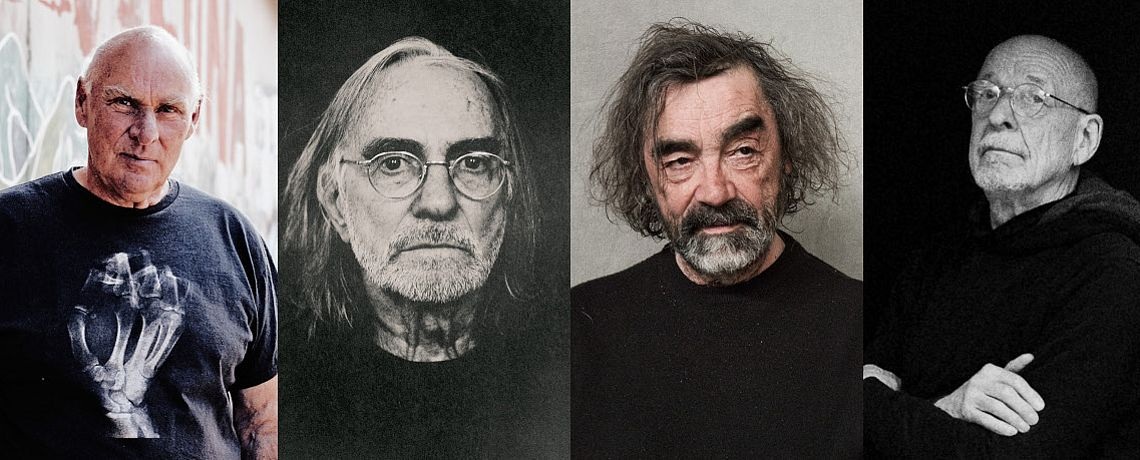 It has never happened before that a “reunion” of a musical group would happen in this way. That the four original members, after more than 50 years, would agree to each publish their own vision of faust! After everything that had happened in between, we had no more hope. That alone is a success.
To shed light on this event, we will have to look far back to 1971, when a colorful group of musicians and some technical staff gathered in an abandoned school converted into a recording and living space in Wümme near Hamburg. In two years, they created some of the most unconventional “rock” music there, which, although it did not meet with a commercial response at the time, remained in the annals as the foundation of so-called krautrock. This anarcho-hippie commune probably simply could not survive in the long term, there were too many individual aspirations and frictions, including pressure from the Polydor label and indirectly from their manager Uwe Nettleback, who demanded more communicative music from faust. Soon, drummer Arnulf Meifert, the only one who had some musical experience, although he was also self-taught, left them. The rest of faust were lucky enough to be more appreciated in England and were able to release two more albums under the auspices of the Virgin label (Tapes and Faust IV). They allowed themselves to record a fifth album under the pretext that all costs would be paid by the label. When the high bills for using the luxury studio and hotel in Munich started coming in, Virgin sent the police to them, faust literally fled and fortunately took the unfinished recordings with them. Only a few years ago, newly mixed, they became the album punkt..
Between 1975 and 1990, we know very little about faust. They supposedly had a few concerts, made a few demos, which can even be found on their YouTube channel. They really took off in 1994, when Jean Herve Peron and Werner "Zappi" Diermaier embarked on an American tour, and the recordings were later upgraded in the studio by Joachim Irmler, and thus the comeback album Rien (Nothing) was created. These three original members of faust functioned until 1997, when Peron left them, and a dispute arose over the use of the name faust, which has had consequences to this day (listen to JH Peron's statement). Irmler and Peron no longer met in work, so Diermaier lured Peron into the "new" faust, while Irmler and other musicians took their version of faust to the stage. They disbanded in 2010 with the album with the meaningful title FAUST IS LAST. That didn't stop Peron and Diermaier, they put together quite a few solid albums with their version of faust, until they broke up. And then suddenly the fourth original member of faust, the master of synthesizer and saxophonist Gunther Wüsthoff, appears. Namely, he was among the "guest" musicians on the album Daumenbruch, which was created in 2022 under the "direction" of Werner Diermaier and was released under the name faust. Two years earlier, Gunther practically unnoticed released his first and only solo album with the meaningful title [to|digi]tal. Nothing faustian.
 As already written, the fact that each of these four members has now released his current vision of faust is, in terms of their relationship, a success. The Bureau-B label somehow managed to convince the conflicting musicians to at least try for themselves. And they did.
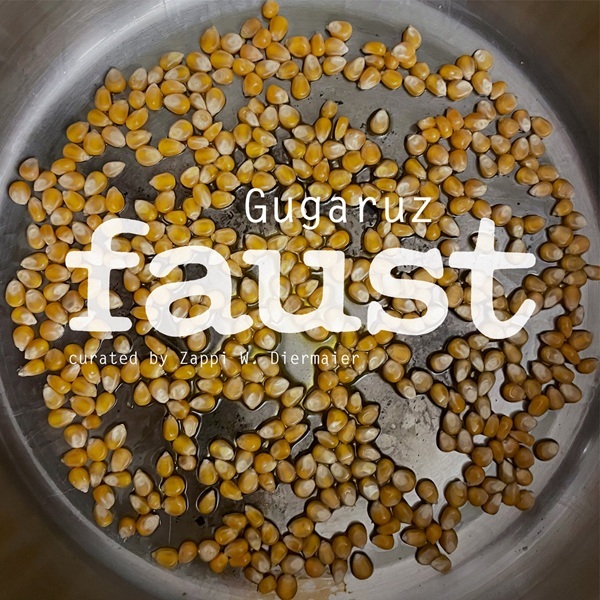
Since these four albums are supposed to be equal, it's best to go in alphabetical order. Werner “Zappi” Diermaier presents himself with the album Gugaruz, which faithfully follows his previous faust albums. Since the first one, Daumenbruch, was created during the corona, the creative process was somewhat at hand. Namely, Diermaier lured a multitude of guest musicians to participate, with the difference that they prepared and sent their contributions remotely. Without knowing how these contributions would be used. Only post festum did Diermaier and his faithful assistant Dirk Dresselhaus (Schneider TM) put them into their final form. The album Blickwinkel was created in a similar way two years later and now Gugaruz. Still, the percussion exercises are in the foreground, the unmistakable sound of metal scrap and a large drum in a skipping rehearsal. Because Diermaier takes his time, his mantric rhythm quickly leads you into a trance. The only thing that is "disturbing" is this dry, "industrial", alienated, mechanical sound, it reminds us again and again of the raw reality. The necessary internal dynamics are then created by a bunch of intertwined textures, which are mostly studio-processed so that we cannot guess their origin. Somewhere a dissonant guitar floats out, somewhere a synthesizer whistles, below it a bass grinds... A minute burst of noise stands out, so that no one accidentally takes faust too lightly. It is fascinating that "Zappi" squeezes fresh samples out of his percussion after all this time. And that I absolutely cannot miss it.
 Just when we thought that Hans Joachim Irmler had retired musically - his last faust album dates back to 2010, he later released some music in collaborations, but in recent years there has been a lull from his camp - he simply responded to an invitation from the Bureau-B label. Given his past activities, it would be difficult to predict anything. His faust was recorded with rapper Dälek, they released a few remixes, they recorded film music, they had completely improvised performances. What will HJ Irmler prepare for us under his own name?
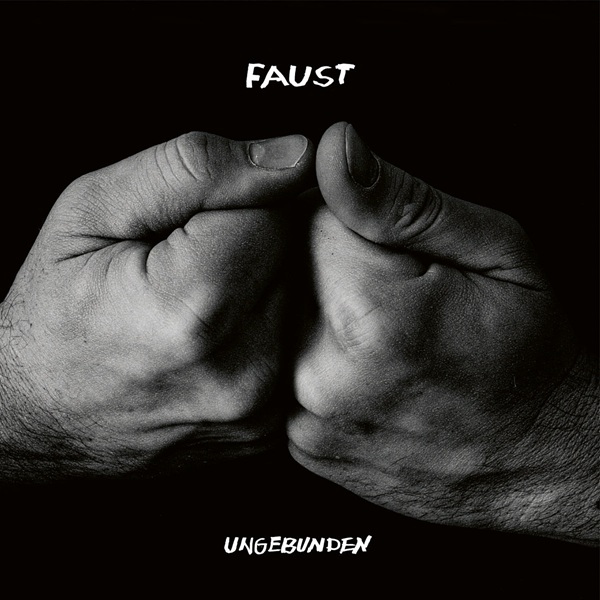
Of course, if on Diermaier's album the percussion set was in the foreground, on the Ungebunden album the characteristic droning on the organ will probably be in the foreground. Perhaps Irmler even blew the dust off the organ that he assembled himself in the early stages of faust and reused it this time. His projection of faust for "today" is based on long distorted drones that have no real direction. He recorded only two two-part compositions for the length of the album, which develop completely freely. This flowing droning is accelerated only by the occasional drum beat and somewhere in the background a synthesizer whistles here and there, the only indication that the music was created in this century. Otherwise, the album Ungebunden sounds like a kind of apology, the last farewell to a complete authorial confession.
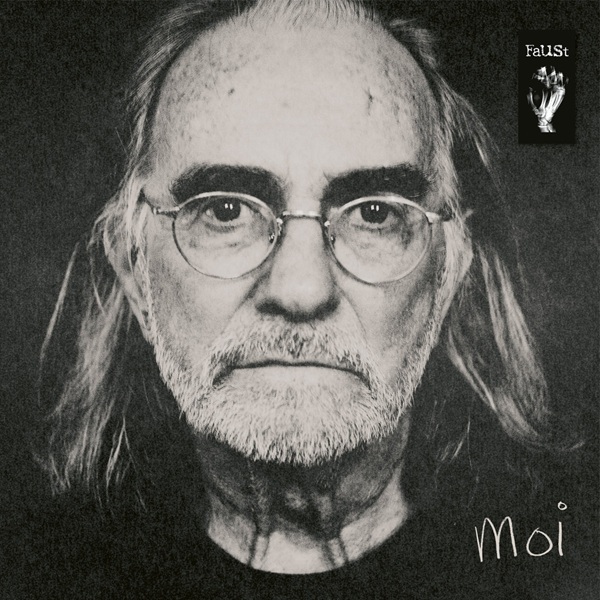 The most diverse, unpredictable and original is the album by Jean Herve Peron. In fact, he recorded a collage that has little in common musically with the present, and rather goes back to the 1940s and 1950s. Some of the lyrics also indicate a return to youth, sung and recited in French, and placed in a cabaret-jazz ballad style from the 1950s. In fact, the first echo of “youth” is the opening cut-up of excerpts taken from French films interwoven with studio effects. This one jumps into the frenetic, velvet-like Diabolus and Musica, accompanied by Cale-like piano strokes. Unfortunately, the years have taken their toll, and Jean's voice is noticeably fading. He's probably aware of this himself, and he's invited a number of other artists into the studio, who have further expanded the range of styles.
If he didn't move forward musically from the original fausts, at most he looked back, in engaged moments he only touched on the current global situation. But almost Dadaistically, with a distance from direct "resistance". How could he put "no border, no nation, stop deportation" and the worn-out "mind the gap" one after the other in the same set of slogans? Maybe this is the feeling of helplessness when you are subjected to a hundred influences that you can no longer process. Is this Peron's definitive retreat into intimacy, because that is the only place he feels safe? In this sense, the key poem of the MOI album is the recitation of Make Me Up, where he completely surrenders to external "pressures".
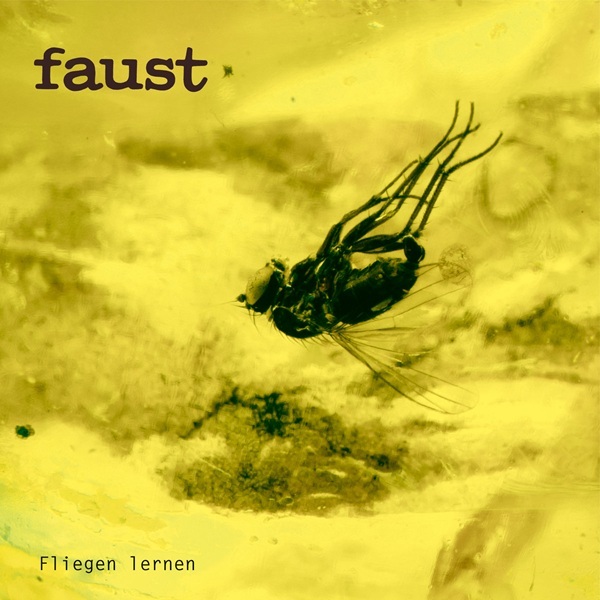 Gunter Wusthoff distanced himself the furthest from the original faust. It is true that the album Fliegen lernen is a departure from the studio-based tinkering with digital effects that he did on his first solo album, but it is still too “modern” to be directly linked to old starting points. Wusthoff has clearly broken with the past, at least the past of 50 years ago, and has stood shoulder to shoulder with the younger generation of German post-rock and experimental dance electronics. I believe that if by some chance all four of them were to find themselves together in a recording studio, Wusthoff would have a veto on his performance. Their approaches are simply not compatible, no matter how broad and open the spirit of faust may be.
But - a similar question arises with other similar deviations - what if we "forget" the relation to the old Faust and focus solely on the album Fliegen lernen, without any preconceived expectations? Then it turns out to be a completely solid, at least interesting, relatively original and courageous album, especially for someone approaching their 80s. It is not at all behind the latest achievements of, for example, the bands Kreidler and Tarwater, with whom it now shares a label. The music smoothly transitions between cosmic electronics of the 70s and almost dance groove, plays with dub, touches on ambient Aphex Twin, while maintaining an organic note with the use of real drums, and at the same time constantly takes care of interweaving textures. It makes sure that the music never runs empty. The only problem is that it formally boasts a relation to faust.
Otherwise, who would know what faust is?
faust photo: Geboren Wustmann
Janez Golič
(Rock Obrobje, september 22 2026)

